Strategic Resilience: Navigating the Middle East's Gas Compression Expansion
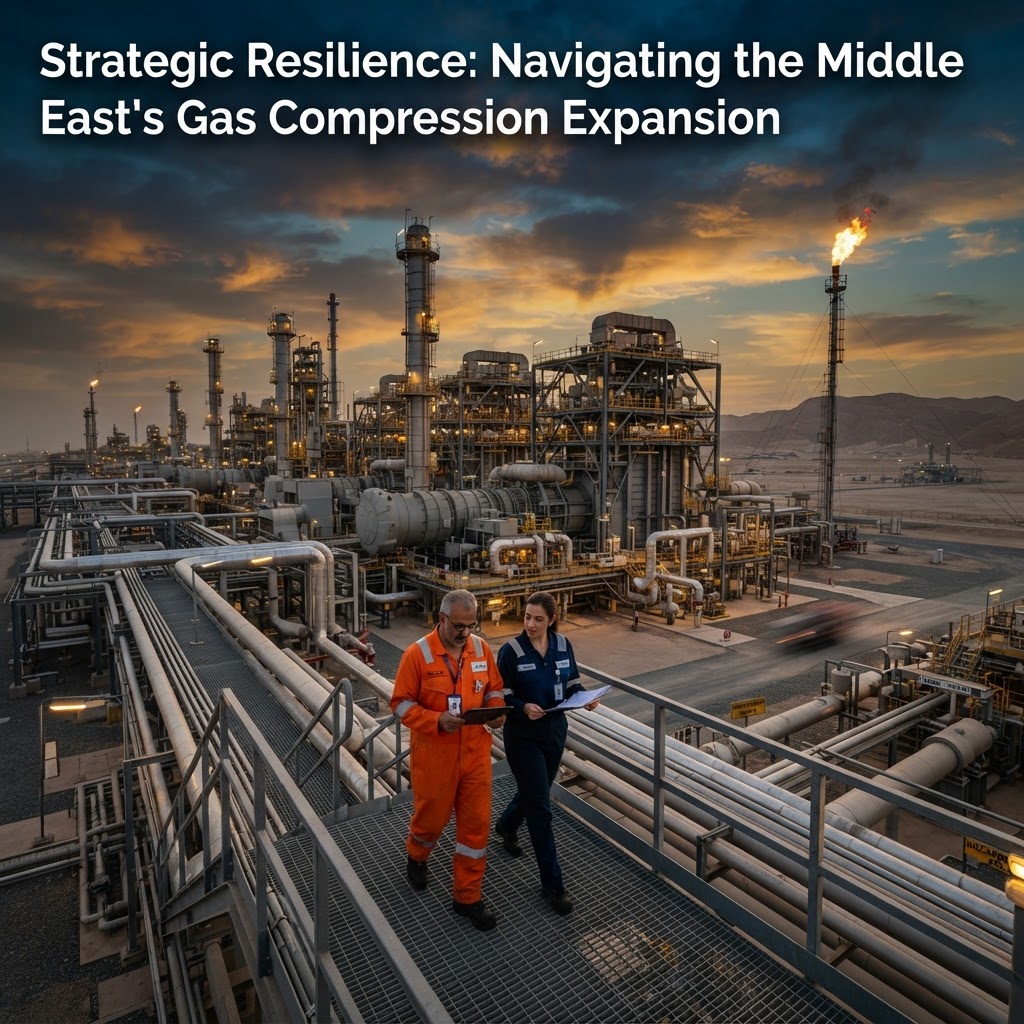
As major EPC contracts for gas compression facilities are awarded in the Middle East, we analyze the strategic importance of infrastructure investment in maintaining regional energy dominance.
The recent surge in ultra-mega EPC contract awards for gas compression facilities across the Middle East marks a pivotal moment for the regional energy sector. As global demand for natural gas remains robust, national oil companies are doubling down on infrastructure that not only enhances recovery rates but also optimizes the efficiency of existing assets. For engineering consultancies and project delivery teams, this trend signals a shift toward high-complexity brownfield integration and large-scale greenfield development.
The Engineering Imperative
Gas compression is the backbone of modern hydrocarbon production. As fields mature, the requirement for sophisticated compression technology becomes non-negotiable. The recent awarding of multi-billion dollar contracts to firms like L&T underscores a clear strategic intent: to maximize output while minimizing the carbon intensity of extraction. From an engineering perspective, these projects are not merely about capacity; they are about precision. Integrating new compression modules into legacy infrastructure requires a level of technical rigor that defines the current competitive landscape in the GCC.
Strategic Implications for Project Delivery
For stakeholders, the challenge lies in execution. The complexity of these projects—often involving remote locations and stringent safety standards—demands a lean approach to project management. At Atticus Energy, we observe that successful delivery in this environment hinges on early-stage front-end engineering design (FEED) accuracy and robust supply chain management. As we look toward the next decade, the ability to deliver these projects on time and within budget will be the primary differentiator for contractors and consultants alike. The focus must remain on modularization and digital twin integration to mitigate risks associated with site-based construction. Ultimately, these investments are a testament to the region's commitment to energy security, ensuring that the Middle East remains the reliable heart of the global energy supply chain despite broader geopolitical volatility.