Strategic Resilience: Decoding the Ghasha Ultra-Sour Gas Expansion
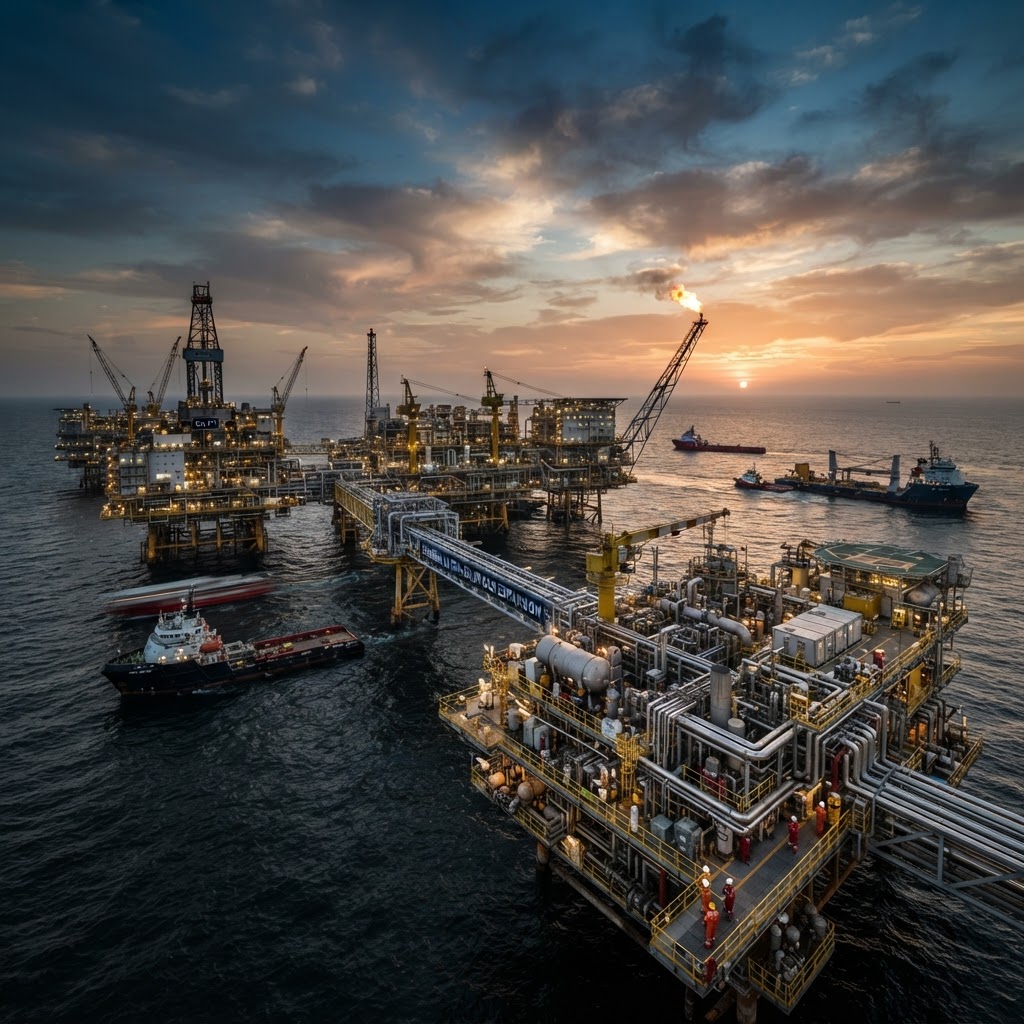
As the Middle East doubles down on domestic gas production, the engineering complexities of ultra-sour fields demand a new paradigm in project delivery and risk management.
The Engineering Frontier of Ultra-Sour Gas
The recent announcement regarding the final investment decisions for the expansion of the Ghasha mega-project marks a pivotal moment for the UAE’s energy strategy. As an advisory consultancy, Atticus Energy views this not merely as a capacity increase, but as a masterclass in managing high-risk, high-reward engineering environments. The Ghasha field is notorious for its extreme concentrations of hydrogen sulfide (H2S) and carbon dioxide, presenting a corrosive environment that pushes the limits of conventional materials science. Developing these resources requires a sophisticated combination of Corrosion Resistant Alloys (CRA) and advanced Sulphur Recovery Units (SRU) that can handle unprecedented throughput.
From a project delivery perspective, the Ghasha expansion underscores the shift toward integrated execution models. In the Middle East, we are seeing a move away from fragmented EPC contracts toward more collaborative, long-term partnerships between National Oil Companies (NOCs) and global engineering firms. This is driven by the sheer technical complexity of the work. When dealing with sour gas, there is zero margin for error; a leak is not just a loss of revenue, but a catastrophic safety and environmental event. Therefore, the implementation of Digital Twins during the design phase has become a non-negotiable standard, allowing engineers to simulate stress points and corrosion rates in a virtual environment before a single pipe is laid.
Strategic Implications for Regional Markets
Beyond the technical hurdles, the Ghasha project serves a broader strategic purpose: gas self-sufficiency. As the GCC states transition their power grids toward renewables, gas remains the essential 'bridge' fuel that ensures grid stability. However, the costs associated with ultra-sour gas extraction are significant. For developers, the challenge lies in maintaining capital efficiency (CAPEX) while navigating the inflated costs of specialized components. At Atticus Energy, we advise our clients to look beyond the initial investment and focus on the lifecycle value. The ability to export LNG while using domestic sour gas for power and industry is a high-value play that justifies the engineering premium. As we move deeper into 2026, the success of Ghasha will likely set the benchmark for similar developments in Saudi Arabia’s Jafurah basin and beyond.
Source: https://www.worldoil.com/news/2026/8/adnoc-ghasha-project-update