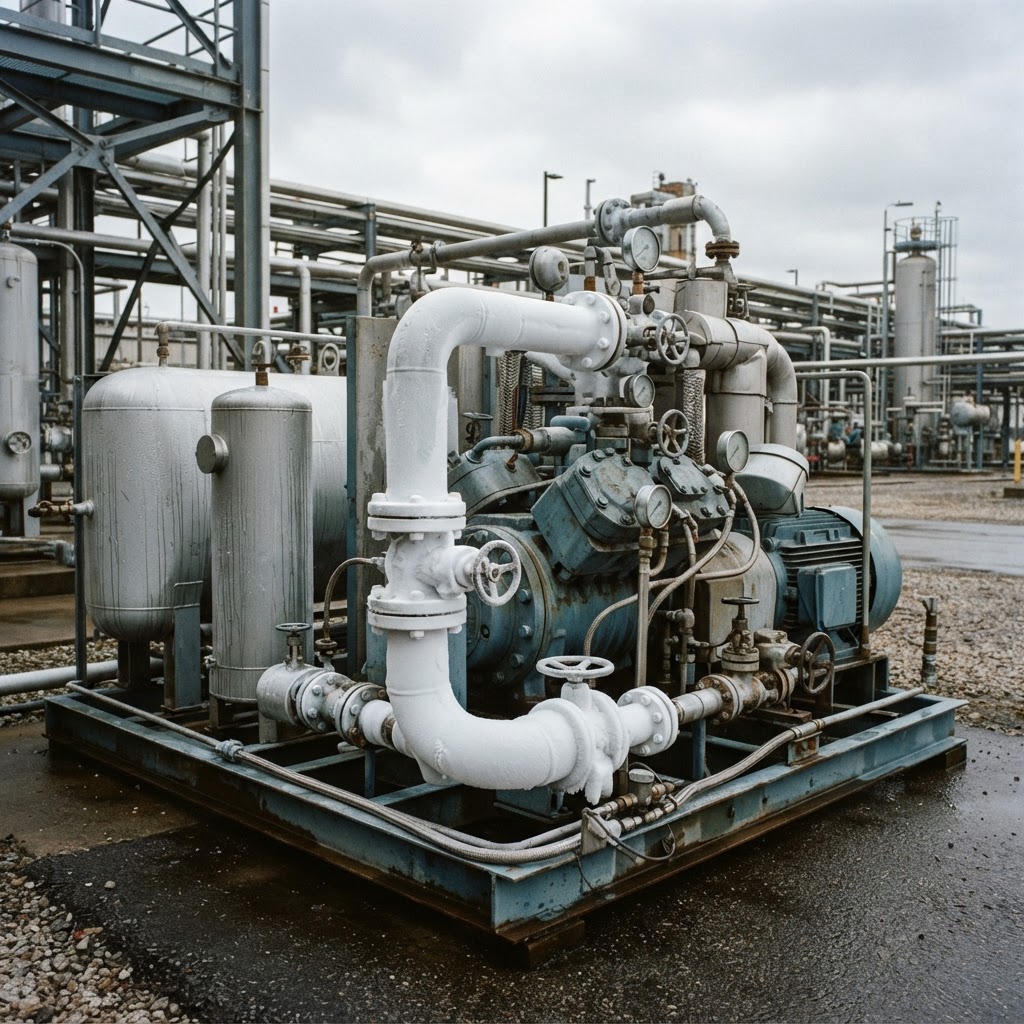
Refrigeration cycles for gas processing: propane, cascade and mixed refrigerant
The colder the duty, the more sophisticated the refrigeration cycle. Simple propane loops serve most gas processing; deep cryogenic duties need cascades or mixed refrigerants.
The situation
Mechanical refrigeration (propane, mixed refrigerant or cascade) provides the cold for dew-pointing, NGL recovery and LPG chilling. Cycle choice and the economiser and compressor arrangement drive both power use and operability.
The basic cycle
Every vapour-compression refrigeration loop has four steps: compress the refrigerant, condense it by rejecting heat, expand it across a valve so it flashes and cools, and evaporate it against the process stream. Propane is the workhorse refrigerant for gas processing and LPG chilling.

Going colder
- Multi-stage propane improves efficiency by evaporating at several pressure levels.
- Cascade cycles stack loops, for example propane cooling an ethylene loop, to reach lower temperatures.
- Mixed refrigerants use a blend that evaporates over a temperature range, matching the process cooling curve closely. These are common in liquefaction.
Design considerations
- Ambient temperature has a large effect on condenser performance and therefore capacity. Hot climates need generous condensers.
- Refrigerant inventory is a flammable hazard and drives layout and fire protection.
- Compressor selection and driver choice dominate capital cost and reliability.
- Packaged chiller units can suit smaller or temporary duties and shorten schedules.
Operating tips
Watch condenser approach temperature, refrigerant purity and compressor suction superheat. Contamination with heavier components quietly reduces capacity over time.
Key Takeaways
- All cycles share the same four steps.
- Hot climates need generous condenser capacity.
- Refrigerant inventory is a hazard that shapes layout.
- Refrigerant purity affects capacity; monitor it.
How Atticus helps
We assess refrigeration options from packaged chillers to multi-train propane systems, and support rehabilitation of existing refrigeration units.
Real-world examples
Esso Longford gas plant, Australia (1998)
Longford shows what happens when cold sections reach temperatures below the material design limit during upsets. Refrigeration design must include minimum design metal temperature and safe-restart procedures.
Read the investigation / sourcerefrigerant contamination
Lube oil and heavier hydrocarbons built up in a propane refrigeration loop. Chiller performance fell steadily, and the plant missed dew-point specs in summer until a refrigerant purification step was added.
If you get it wrong
- Brittle fracture if minimum design temperatures are breached.
- Off-spec dew point and lost NGL recovery.
- High power consumption.
- Compressor surge and trips in transient operation.
Relevant standards
Links go to the publisher's official page (ISO, IEC, BSI, API, NFPA, HSE and others). Most standards must be bought from the publisher.
- API standards catalogue (API 520/521, 580/581, 618, 625, 650, 754 and more)api.org
- ISO 15663:2021 (EN ISO 15663) — Life cycle costingiso.org
- BS EN 1473:2021 — LNG: design of onshore installationsknowledge.bsigroup.com
Further reading
Take this briefing with you
A one-to-two page PDF summary: situation, diagram, key takeaways, consequences, examples and standards.