Navigating Volatility: Engineering Resilience in the Face of Middle East Supply Risks
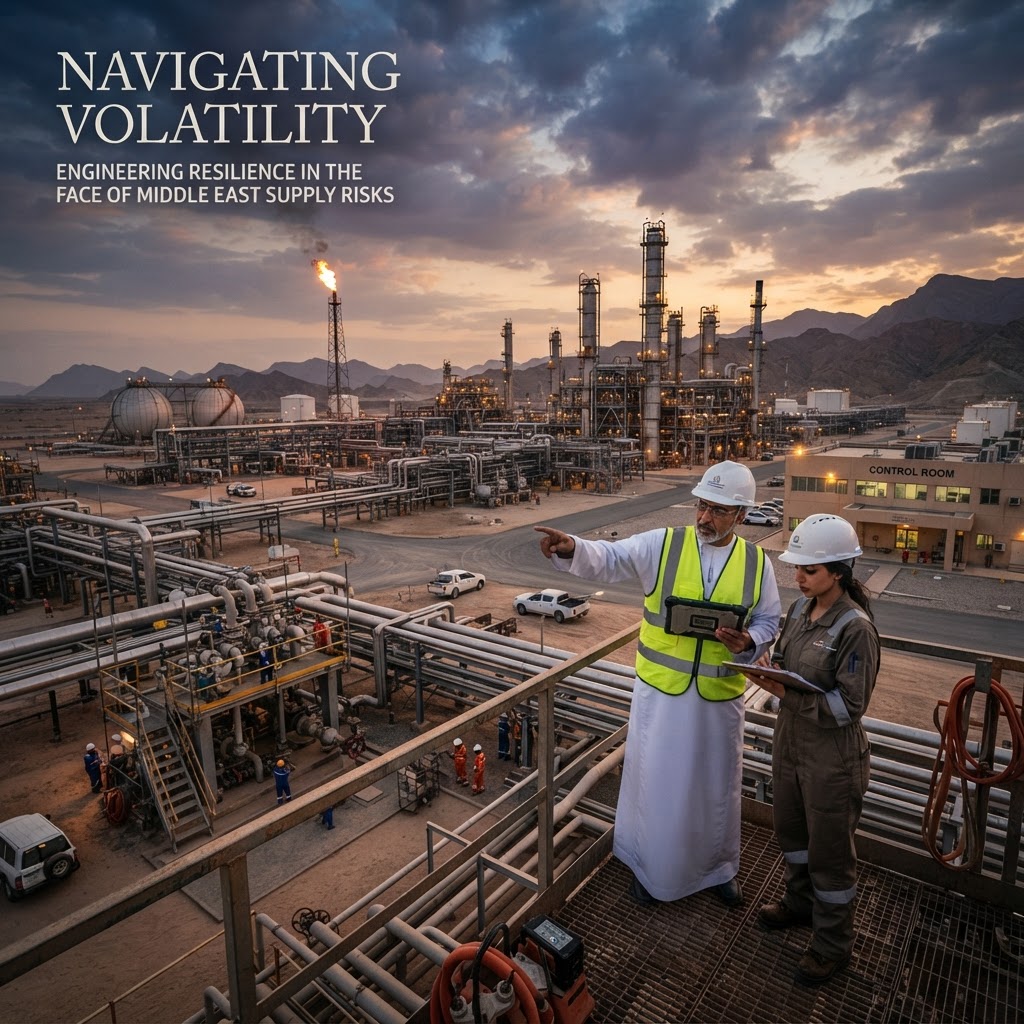
As Brent crude sustains levels above $100 per barrel amid regional instability, Atticus Energy examines the strategic imperative for operators to prioritize infrastructure hardening and supply chain agility.
The recent surge in Brent crude prices, breaching the $100 per barrel threshold, serves as a stark reminder of the fragility inherent in global energy supply chains. For stakeholders in the Middle East and Europe, the current geopolitical climate is not merely a market headline; it is a fundamental shift in the risk profile of capital-intensive energy projects. At Atticus Energy, we observe that the premium currently priced into the market reflects a genuine concern regarding the security of transit routes and the continuity of production assets.
Engineering for Uncertainty
For engineering firms and project developers, the mandate is clear: resilience must be baked into the design phase. We are moving away from an era where 'just-in-time' logistics and lean, centralized infrastructure were the gold standards. Today, project delivery must account for potential disruptions to shipping lanes and the necessity of localized, redundant processing capabilities. This involves a strategic pivot toward modular construction and decentralized power generation, ensuring that critical assets can maintain operational integrity even when external supply chains are compromised.
Strategic Capital Allocation
From a capital investment perspective, the current environment necessitates a dual-track strategy. While the temptation to maximize short-term output is high, operators must balance this with long-term asset hardening. We advise our clients to prioritize investments in digital twin technology and predictive maintenance. By creating high-fidelity virtual replicas of physical infrastructure, operators can simulate stress scenarios—ranging from supply chain bottlenecks to physical security threats—allowing for proactive mitigation rather than reactive crisis management.
Furthermore, the 'Safe Barrel' narrative gaining traction in Western markets highlights a growing preference for supply security. For Middle Eastern operators, this underscores the importance of demonstrating operational excellence and transparency. As we look toward the remainder of 2026, the winners in this sector will be those who successfully integrate robust engineering solutions with a sophisticated understanding of geopolitical risk, ensuring that energy flows remain uninterrupted despite the prevailing volatility.
Source: https://oilgasleads.com/oil-tops-100-as-middle-east-supply-risks-intensify