The Mediterranean Hydrogen Corridor: Retrofitting for Resilience
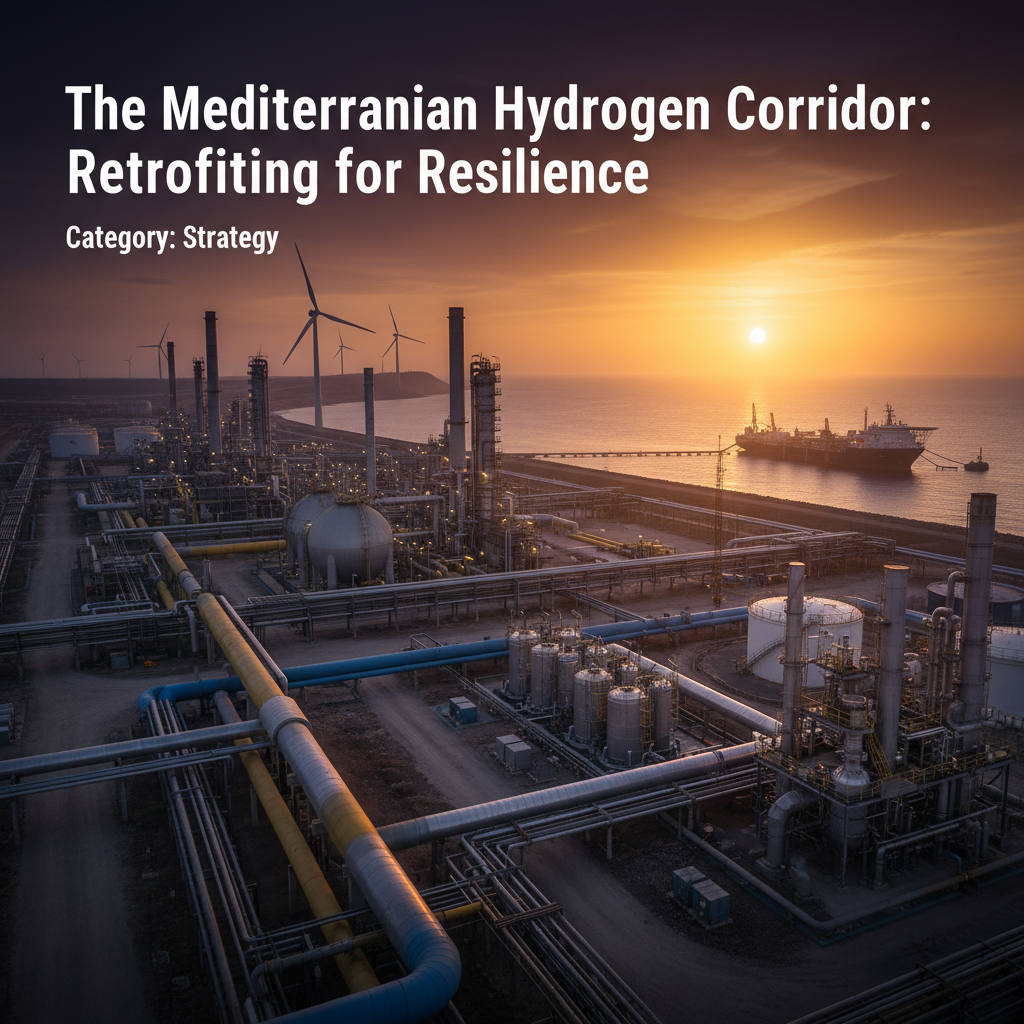
The EU's latest energy infrastructure update prioritizes the repurposing of Mediterranean gas assets, creating a complex engineering challenge for legacy oil and gas operators.
The European Union's recent update to the Trans-European Networks for Energy (TEN-E) framework has sent a clear signal to the Mediterranean energy sector: the future of European energy security is intrinsically linked to the repurposing of existing oil and gas infrastructure. As of July 2026, the focus has shifted from speculative pilots to large-scale retrofitting of subsea and cross-border pipelines for hydrogen and CO2 transport. This development presents a unique set of challenges and opportunities for the engineering community.
Infrastructure as a Transition Lever
At Atticus Energy, we have long advocated for the strategic reuse of legacy assets. The 'Mediterranean Hydrogen Corridor' project is perhaps the most ambitious manifestation of this strategy. However, the engineering reality is complex. Hydrogen embrittlement remains a primary concern for high-strength steel pipelines originally designed for sweet gas. Strategic advisory in this context is not just about policy; it is about rigorous technical assessment. We are seeing a surge in demand for detailed metallurgical analysis and flow dynamics modeling to determine the safe 'blend' limits or the feasibility of 100% hydrogen conversion. This is the intersection of traditional O&G expertise and transition engineering.
The Engineering of Decarbonized Flows
Beyond the pipelines themselves, the retrofitting of compressor stations and terminal facilities requires a lean, highly specialized engineering approach. Traditional EPC (Engineering, Procurement, and Construction) models are often too rigid for these 'brownfield' transition projects. Instead, a more agile, strategic engineering model is required—one that can adapt to the evolving regulatory standards of the EU’s 2026 Hydrogen Directive. For capital investors, these retrofitting projects represent a significantly more attractive entry point than greenfield developments, offering faster routes to market and lower environmental impact scores. As we assist our clients in navigating this transition, the emphasis remains on technical integrity and strategic foresight, ensuring that today's gas assets become tomorrow's decarbonized energy arteries.
Source: https://www.atticusenergy.com/insights/mediterranean-hydrogen-2026