The Rise of the Infrastructure Hub: Brownfield Optimization in the Mature North Sea
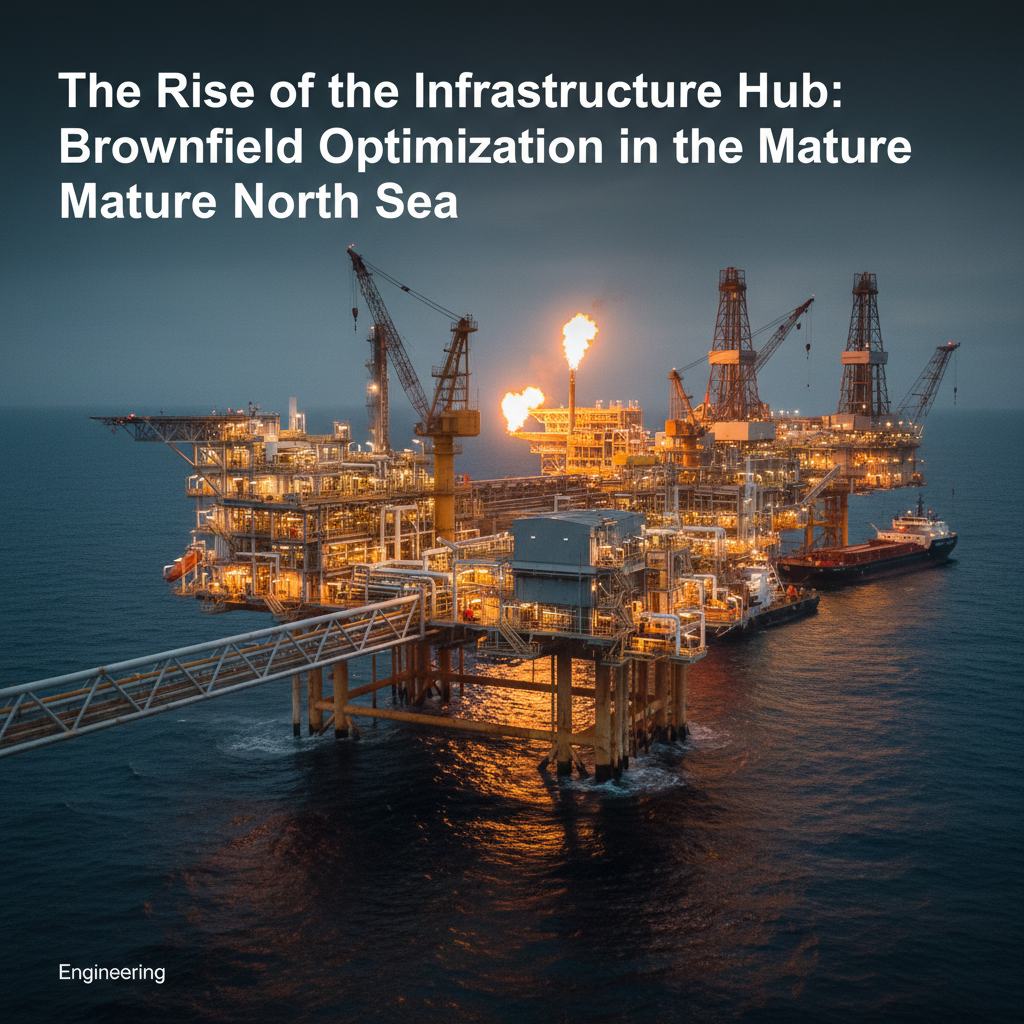
With Equinor and Vår Energi reaching Final Investment Decisions on major subsea tie-back projects, the North Sea is proving that the future of European energy security lies in brownfield optimization and lean infrastructure repurposing.
The Strategy of ‘Infrastructure-Led Exploration’
In the current European energy landscape, where political shifts and carbon regulations create a complex backdrop for investment, the North Sea is witnessing a tactical resurgence. Recent Final Investment Decisions (FIDs) by Vår Energi on the Cerisa and Gjøa area projects, alongside Equinor’s NOK 4 billion investment in the Troll field’s ‘TWIN’ subsea development, highlight a definitive strategic trend: the dominance of the subsea tie-back. For the strategic energy consultant, these developments are a masterclass in maximizing mature asset life through lean engineering.
The shift away from massive greenfield hubs toward 'Infrastructure-Led Exploration' (ILX) is a response to both economic and environmental pressures. By utilizing existing processing capacity on platforms like Gjøa and Troll A, operators are able to bring new volumes online with significantly lower break-even prices and a vastly reduced carbon footprint. Equinor’s ambition to halve execution time for subsea projects by 2035 is not merely an internal target; it is an industry-wide imperative. In a mature basin like the North Sea, speed and capital efficiency are the only ways to stay competitive against cheaper global benchmarks.
Navigating Political and Regulatory Headwinds
While the Norwegian Continental Shelf is doubling down on tie-backs to secure exports to Europe, the UK sector faces a different set of challenges. The recent political transition and the ensuing debate over North Sea tax frameworks have created a 'wait-and-see' atmosphere for major players. However, the lesson from projects like Vår Energi’s Gjøa Nord is that 'resilience is the new efficiency.' By adopting a portfolio approach—bundling multiple smaller discoveries into a single subsea development program—operators can hedge against regulatory volatility.
This 'portfolio' logic is also driving the decommissioning market, as seen with TotalEnergies’ recent contract award to Ocean Installer for the removal of structures in the Byggve and Skirne fields. The strategic advisor must now look at an asset's entire lifecycle simultaneously. We are no longer just planning for production; we are planning for the 'circularity' of the infrastructure. Can these pipelines be repurposed for Carbon Capture and Storage (CCS)? Can the platform power-from-shore systems be integrated into a wider offshore wind grid? The most successful projects in 2026 are those that treat the North Sea as a flexible energy hub rather than a collection of depleting wells.
The Lean Path Forward
For the engineering community, the takeaway from the last week of June is that the 'subsea factory' concept is now the baseline. Standardisation, reuse of equipment, and simplified processes are the tools that will sustain gas flows into Europe through the 2030s. The North Sea is far from retired; it is being re-engineered for a leaner, more strategic era of energy security. As consultants, we advise our clients to look beyond the headline politics and focus on the technical reality: the most valuable assets in the coming decade will be those that can serve as anchors for low-cost, low-carbon tie-backs.