The Critical Role of Front-End Loading in Brownfield Projects
Brownfield success depends on early clarity, field realism and decisions made before the cost of change rises sharply.
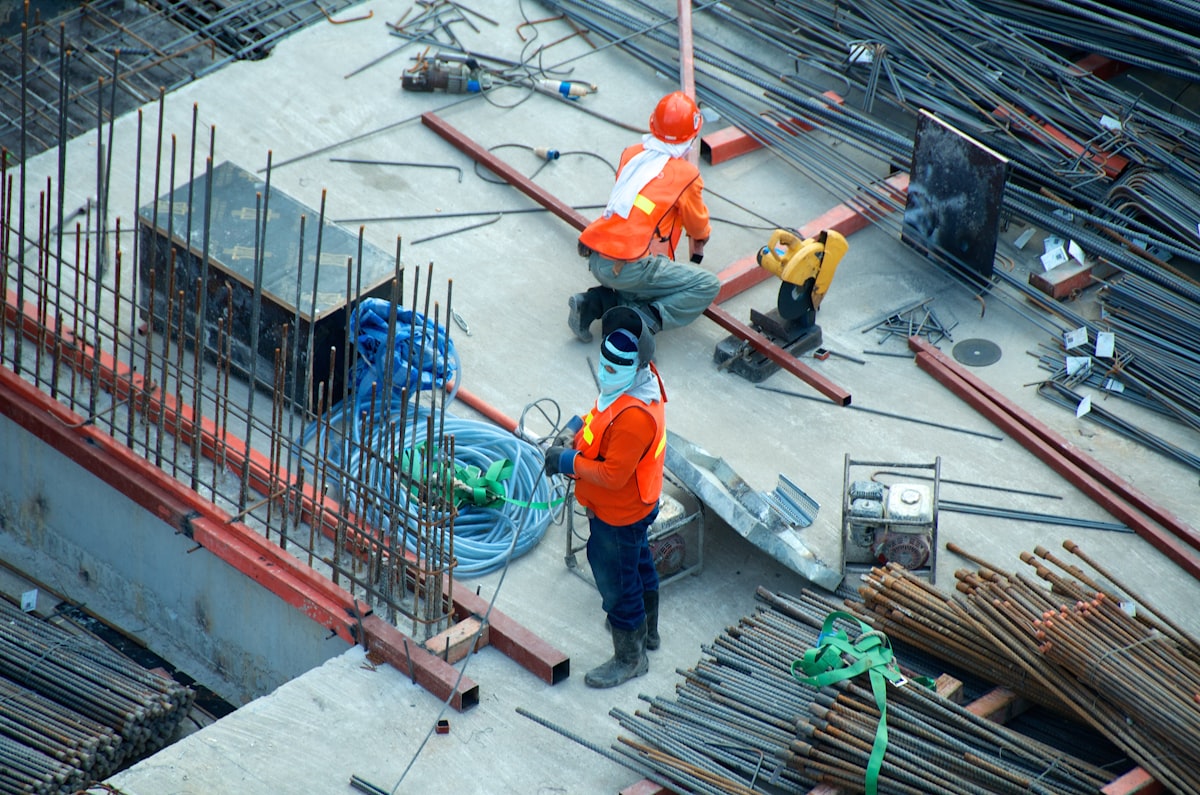
Brownfield projects fail differently from greenfield ones. The failure modes are subtler, harder to see early, and almost always traceable back to insufficient definition work in the front end.
What Makes Brownfield Different
In a greenfield project you are designing on a blank canvas. The constraints are real: geology, infrastructure, regulatory frameworks. But you are not fighting existing plant, live systems, operating procedures or the ghosts of previous modifications. Brownfield is a different beast entirely.
Brownfield modifications take place on operating assets. The interaction between the new scope and the existing facility is rarely understood until someone has physically been on site, looked at the as-built drawings (which are frequently wrong), interviewed the operators, and checked the structural survey against what the model claims. Every one of these activities belongs in the front-end phase. Defer them to execution and the cost multiplies.
Industry benchmarking bodies such as IPA (Independent Project Analysis) have tracked thousands of capital projects and consistently found that projects with strong front-end definition outperform those without, on cost, schedule and operability. The gap is wider still on brownfield work, where the penalty for a wrong assumption compounds through every discipline that built on it.
The cost-of-change curve
Indicative relative cost to implement a design change at different project phases
The Five Pillars of Good Front-End Loading
Front-end loading is not a single document or a checklist. It is a systematic effort to reduce uncertainty before committing to execution expenditure. On brownfield energy projects across North Africa, the North Sea and the Middle East, five areas consistently separate well-defined projects from poorly defined ones.
Field Verification of As-Built Data
As-built drawings on operating plants are almost never fully accurate. Decades of modifications, maintenance activity and undocumented changes mean the paper record diverges from physical reality. Field verification surveys routinely uncover significant discrepancies between the 3D model and the physical asset, including some that would cause serious constructability conflicts in execution. A field survey costs a fraction of executing against wrong data.
Tie-In Studies and Isolation Philosophy
Every brownfield modification connects to existing infrastructure. Tie-in studies define exactly where those connections occur, the isolation strategy required, the operational impacts during construction and the maintenance window requirements. A poorly defined tie-in philosophy, discovered during detailed engineering, is one of the most common causes of brownfield schedule slippage. It drives blind design revisions that cascade through piping, civil, structural, C&I and safety deliverables simultaneously.
Constructability and Operability Reviews
Design intent is one thing; building it safely on a live asset while maintaining production is another. Constructability reviews, led by experienced construction professionals who challenge the design against site realities, identify access constraints, lifting plans, temporary isolation requirements and sequencing logic. Operability reviews go further, asking whether the finished facility can be operated and maintained safely by the site teams who will eventually own it.
Flow Assurance and Process Integration
On brownfield modifications involving process change, the interaction between the new scope and the existing process systems needs rigorous simulation. Adding a compression train, installing a new separation vessel, or upgrading a heat exchanger changes the hydraulic and thermal balance of the wider system. This must be modelled, understood and documented in FEED before detailed engineering begins. Otherwise, surprises in construction translate directly into commissioning failures.
Safety and Risk Integration from Day One
HAZOP is not a box to tick at the end of FEED. The most effective projects integrate safety thinking from the earliest concept stage: identifying high-level hazards, defining safety-critical elements, and establishing the ALARP framework before design is committed. On brownfield assets this matters even more, because existing plant creates additional hazard scenarios — leak paths, personnel exposure to live process systems, and the cumulative effect of simultaneous construction activities.

Common Front-End Loading Failures
Despite the evidence, projects continue to be sanctioned with inadequate definition. The reasons are usually commercial rather than technical: schedule pressure, early cost estimates that look attractive before reality intervenes, or a belief that the execution team can "work it out." None of these holds up.
The most common failures we see are:
- Scope freeze that isn't actually frozen — changes continue through detail engineering, often driven by incomplete FEED data.
- Estimate quality that overstates accuracy — a Class 4 estimate presented as Class 3, creating false confidence at FID.
- Missing key long-lead equipment decisions — compressors, heat exchangers and vessels ordered late because the FEED didn't resolve the technical basis.
- Insufficient HAZOP participation — key disciplines absent from the HAZOP, leading to incomplete risk identification.
- No independent design verification — FEED produced by the contractor who will also do detail engineering, with no owner-side technical review.
Our Approach at Atticus Energy
Our front-end studies work is anchored in a simple belief: the purpose of FEED is to reduce risk before committing capital. Every deliverable, every review, every technical decision should be evaluated against that standard. If an activity does not reduce risk or improve definition quality, it should be challenged.
We bring experienced multi-discipline teams who combine process, piping, civil, mechanical, electrical, C&I and safety engineering with genuine brownfield site experience. Delivering a quality FEED on time and within budget is not a supporting objective for our project managers. It is the primary one.
For operators contemplating brownfield scope, one piece of advice: invest in your front-end studies as if your project depends on them — because it does.