Capital Discipline and Geopolitical Headwinds: Analyzing TotalEnergies' Phased Realignment in Iraq
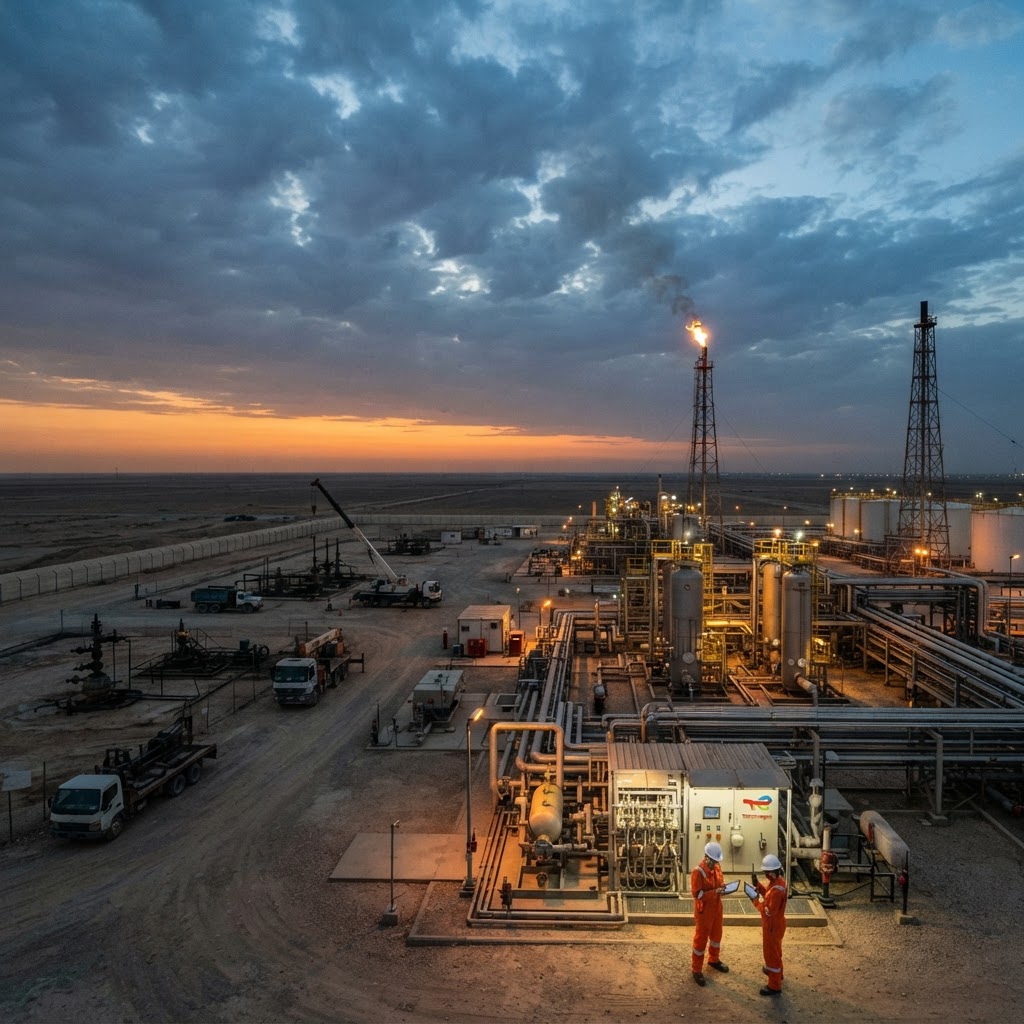
TotalEnergies' move to slow capital expenditure on its $10bn multi-energy project in Iraq signals a return to rigorous capital discipline and risk-adjusted phase gating across Middle Eastern megaprojects.
Recent reports confirming that TotalEnergies is looking to moderate spending pacing across its flagship $10 billion Gas Growth Integrated Project (GGIP) in Iraq highlight a defining theme in contemporary upstream and midstream asset delivery: the assertive return of capital discipline over volume-chasing ambitions. While the GGIP was conceived as a landmark multi-energy initiative—integrating associated gas capture, seawater treatment, oilfield pressure maintenance, and 1 GW of solar power—the practical engineering and commercial realities of execution in complex frontier jurisdictions continue to demand calculated pacing.
The Engineering and Commercial Bottlenecks of Integrated Megaprojects
Integrated energy projects of this scale are structurally prone to compounding interface risks. The technical dependencies among seawater intake and treatment infrastructure, power distribution, and sour gas gathering facilities mean that delay or contractual friction on one package directly degrades the return profile of the adjacent assets. For operators like TotalEnergies, managing exposure in Southern Iraq is not simply a matter of sovereign risk; it is an engineering delivery question. Slowing cash deployment permits project management teams to resolve engineering design variances, stabilize supply chain schedules, and prevent the severe cost escalations that plague unconstrained capital delivery.
From an owner's engineer perspective, phased execution is a pragmatic de-risking instrument rather than an admission of structural failure. When subsurface pressures, export pipeline logistics, and commercial framework clarifications are progressing asynchronously, accelerating capital commitments on EPC contracts creates massive financial exposure. Pacing capital outlays preserves balance sheet optionality, especially as international oil companies (IOCs) balance upstream reinvestment against rigorous returns demanded by institutional shareholders.
Strategic Advisory Lessons for Regional Project Sponsors
For national oil companies (NOCs) and private capital sponsors across the Middle East, this development reinforces the necessity of lean front-end loading (FEL). Megaprojects must be engineered with modularity from inception. Designing facilities that can achieve incremental first-gas or early power milestones decouples capital expenditure from protracted, macro-scale facility commissioning. As energy advisory specialists, our perspective is unequivocal: technical excellence must be tethered to contract flexibility. Operators must construct contracts that allow throughput-based phase gating without triggering punitive contractor claims or long-lead equipment procurement write-downs.
Source: https://www.meed.com/industries/oil-and-gas?industry=77504