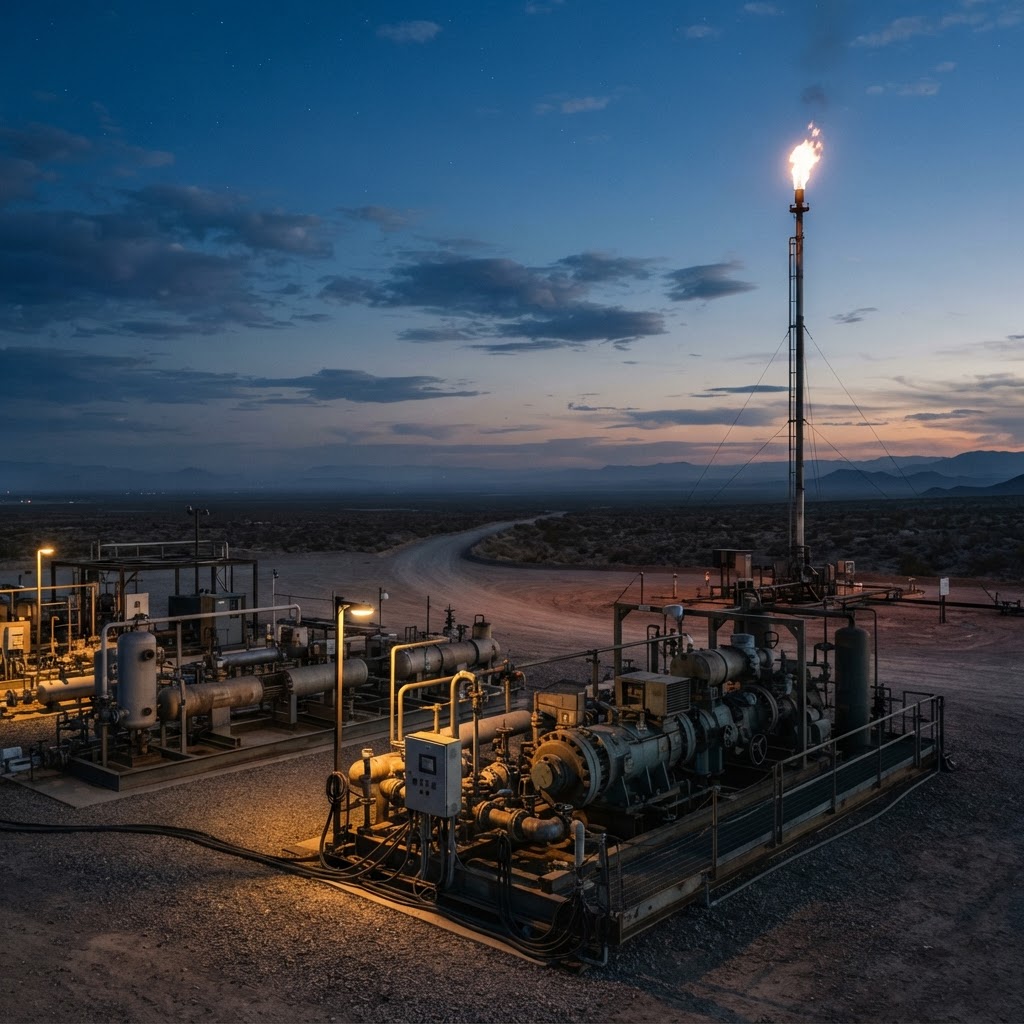
Reducing routine flaring: options for associated gas
Flared gas is lost value and avoidable emissions. The right outlet depends on volume, distance to market, composition and how long the field will produce.
The situation
Associated gas produced with oil is often flared when there is no market or infrastructure. Reduction options include gas re-injection, power generation, gas-to-pipeline, NGL/LPG recovery and flare gas recovery for routine flows.
The problem
Where oil is produced, associated gas comes with it. If there is no outlet, it is flared. Routine flaring wastes a resource, emits CO₂ and other pollutants, and is increasingly restricted by regulation and investor pressure.

The outlets
Use it on site. Power generation and heating are the simplest outlets, but rarely absorb all the gas.
Reinject it. Gas can support reservoir pressure or be stored for later sale. This needs compression and a suitable reservoir.
Process and sell it. A gas plant removes liquids and impurities and sends gas to a pipeline. This is the route for large volumes near a market.
Recover liquids first. Small or modular units can extract LPG and condensate from rich gas, which carry more value per unit volume. The lean gas still needs an outlet.
What decides the outlet
- Volume today and over field life.
- Distance to an existing pipeline or user.
- Composition, including sulphur and liquids content.
- Who would build, own and operate the infrastructure.
Getting started
Measure flaring properly, by source and over time. Many reduction programmes begin with better metering, compressor reliability and control improvements, which cost little and deliver quickly, before larger capital projects.
Key Takeaways
- Measure flaring by source before choosing a solution.
- Reliability improvements often deliver early reductions.
- Match the outlet to volume, distance and field life.
- Rich gas may justify liquids recovery even at small scale.
How Atticus helps
We screen associated gas utilisation options, from compressor reliability fixes to gas gathering and processing concepts, and build the economics to support a decision.
Real-world examples
Context: global flaring
The World Bank estimates that well over 100 billion cubic metres of gas are flared every year, and leads the Zero Routine Flaring by 2030 initiative that many governments and operators have endorsed.
power-to-site project
A producing field installed gas engines fed by associated gas. Routine flaring fell, diesel imports were displaced, and the project paid back within a few years. The key was matching gas availability and composition to the engines.
If you get it wrong
- Lost value from a saleable resource.
- Greenhouse gas and black carbon emissions, and regulatory penalties.
- Community and reputational pressure.
- Restrictions on oil production where flaring limits apply.
Relevant standards
Links go to the publisher's official page (ISO, IEC, BSI, API, NFPA, HSE and others). Most standards must be bought from the publisher.
- World Bank — Zero Routine Flaring by 2030worldbank.org
- ISO 23251:2019 (BS EN ISO 23251) — Pressure-relieving and depressuring systemsiso.org
- ISO 14224:2016 (BS EN ISO 14224) — Reliability and maintenance dataiso.org
Further reading
- World Bank — Global Flaring and Methane Reduction Partnershipworldbank.org
- Gas flaresen.wikipedia.org
Take this briefing with you
A one-to-two page PDF summary: situation, diagram, key takeaways, consequences, examples and standards.